
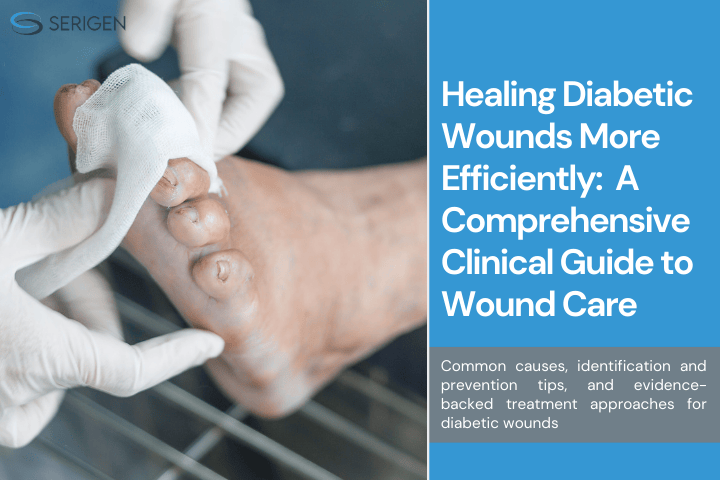
Diabetes significantly hinders the body’s natural healing process, causing minor cuts to escalate into chronic, non-healing ulcers. As an estimate, about 15–25% of individuals with diabetes will develop a diabetic foot ulcer (DFU) in their lifetime, leading to serious risks like infection, amputation, and hospitalization.
These wounds evolve through distinct phases, with the initial signs of diabetic ulcers often being subtle skin changes that go unnoticed. To prevent complications, it is essential to understand the symptoms, appearance, and treatment options. This includes knowing about proper diabetic wound care, the most effective dressings for diabetic ulcers, and strategies for accelerating the healing process.
This blog post will cover the main causes, prevention methods, identification tips, and research-backed treatment options for diabetic foot ulcers and other chronic diabetic wounds, offering practical advice on timely care and when to seek medical help.
Why Do Diabetic Wounds Occur?
The main cause of diabetic wounds is persistently high blood sugar levels, which gradually damage the body’s healing systems. Elevated glucose levels weaken blood vessels, cause nerve damage, reduce circulation and limit the oxygen and nutrient supply essential for tissue repair. Nerve damage (neuropathy) means you can’t feel pain, so small injuries, cuts, or blisters go unnoticed and untreated. Secondly, poor blood flow (circulation) makes the skin dry, prone to cracking, and slow to heal. Constant friction or pressure from calluses (dry and thickened skin), foot deformities, or tight shoes can cause a minor spot to quickly break down into a persistent diabetic ulcer.
Moreover, poor immunity in diabetic people slows the body’s response to infection, allowing minor injuries to become serious wounds. Reduced collagen production impairs normal skin regeneration. Even a small wound faces delayed healing due to chronic inflammation common in diabetes. When circulation and nerve function are compromised together, wounds can rapidly progress. This combination of factors makes early detection and proper care of diabetic wounds essential. Understanding these causes helps prevent complications and protect long-term health.
Clinical Classification: Types of Diabetic Wounds
Diabetic patients are susceptible to various wounds owing to the complexities of pathologies. The types of diabetic wounds typically include diabetic ulcers due to trauma (DUDT), ischemic ulcer, arterial ulcer, neuropathic ulcer, mixed ulcer, neuro-ischemic, furuncle/carbuncle, venous ulcer, diabetic bullae, and cellulitis.
- A DUDT is a traumatic wound often caused by external forces like accidents, surgeries, friction, burns, radiation, thermal injuries, and mechanical trauma. Trauma is the primary cause of diabetic ulcers.
- Ischemic ulcers, which often appear pale, yellow, and cold with a weak or absent pulse, are caused by inadequate blood flow that leads to local ischemia in the skin and underlying tissues. These ulcers can initially manifest as blue discoloration, necrosis, or gangrene, often starting at the fingertips, and pose an increased risk of amputation if left untreated.
- Arterial ulcers are common in patients with insufficient blood flow and cause severe pain. Inadequate blood circulation leads to reduced oxygen and essential nutrient supply to the tissues, resulting in cellular demise. These ulcers often show significant pain, clearly demarcated margins, atrophic and shiny skin, decreased hair density, elevation-induced pallor, diminished peripheral pulses, and delayed capillary refill.
- Neuropathic ulcers are often preceded by callus formation and have a distinct appearance. They are most frequently observed on the foot sole. These ulcers arise due to loss of sensory perception of pain.
- A furuncle, or boil, is a painful skin infection that affects the area around a hair follicle, usually caused by the bacteria Staphylococcus aureus.
- A carbuncle is a larger, deeper infection made up of several connected boils. Carbuncles are more common in people with diabetes and often appear on the back of the neck and upper back.
- Venous ulcers occur when the veins in the legs cannot push blood back up to the heart properly. This causes blood to pool in the lower legs and increases pressure. Over time, the high pressure and poor circulation damage the skin, leading to ulcers.
- Diabetic bullae are sudden, painless blisters that appear on the skin of people with diabetes. They often show up on the feet, legs, or hands without any injury. The blisters look like burns but contain clear fluid and usually don’t cause much pain. They heal slowly and need gentle care to prevent infection.
- Cellulitis is a sudden bacterial infection that affects neuroischemic foot ulcers that occur in individuals with peripheral neuropathy and ischemia, and is caused due to nerve damage. The ulcers are characterized by calluses or thickening of skin at the wound edges.
Healing Dynamics: Why Do Diabetic Wounds Heal Slowly?
Diabetic wounds exhibit a significantly prolonged healing trajectory compared to those in healthy individuals. For instance, a minor ulcer that might resolve in 10–14 days for a healthy person often persists as a diabetic ulcer for six weeks or more, even with rigorous management. This delayed healing is primarily driven by high blood sugar, which impairs nearly every stage of tissue repair:
- Vascular Damage (Microangiopathy): High blood sugar harms the small blood vessels, making their walls thick and reducing blood flow. This restricts the oxygen and nutrients needed for healing.
- Nerve Damage (Neuropathy): Nerve damage reduces protective sensation, causing minor injuries to go unnoticed and worsen before they are discovered and treated.
- Weak Immunity: High glucose slows the body’s defense system. White blood cells do not reach the wound site quickly to fight against pathogens, leading to an increased risk of infection.
- Persistent Infection: Microbes at the wound site often create protective biofilms, making them resistant to both the body’s immune cells and antibiotic treatments.
- Chronic Inflammation: Diabetic wounds are often arrested in the inflammatory phase and under a continuous oxidative stress trap, resulting in impaired healing.
Collectively, these vascular, neural, immune, and inflammatory abnormalities create a destructive environment where tissue breakdown outpaces the body’s repair capacity, resulting in the characteristic and severely delayed healing of diabetic wounds.
Evidence-Based Approach to Diabetic Wound Care
Effective diabetic wound care is a holistic, systematic process requiring a multidisciplinary team. The protocol centers on establishing a healing environment through the following key steps:
1. Ensuring Adequate Blood Flow: Vascular Assessment & Revascularization
Healing is not possible without optimal blood flow, so every patient receives a detailed check of their circulation status. If blood flow is poor, procedures to improve it may be advised. Restoring circulation helps the wound get the oxygen and nutrients it needs to heal properly.
2. Wound Bed Preparation: Debridement
Dead tissue and debris slow down healing and can hold bacteria, so they need to be removed. Regular wound cleaning, called debridement, clears away this dead material and prepares a healthy surface for healing. Different methods—such as sharp, enzymatic, autolytic, or mechanical techniques—are chosen based on the type of wound and the patient’s needs. This process reduces the risk of infection and encourages the growth of fresh, healthy tissue.
3. Infection Control
Diabetic wounds can easily get infected, making healing much harder. Topical treatments such as silver or iodine are used to reduce surface bacteria. If a deeper or more serious infection is suspected, doctors use culture-based systemic antibiotics, especially for cellulitis, deep tissue infection, or bone infection. Treating infections early helps prevent minor issues from turning into serious, limb-threatening problems.
4. Creating the Optimal Healing Environment: Moisture balance
An optimal moisture level at the wound site is important for proper wound healing. Too much moisture can soften and damage the skin and cause maceration, while a dry wound heals slowly. An ideal dressing like Seriderm maintains an optimal moisture level at the wound site, aiding skin regeneration, epithelization, and new blood vessel formation. Dressings are often chosen based on the wound bed condition, levels of wound exudate, wound depth, and the risk of infection.
5. Metabolic Optimization
Wound healing is not possible without intrinsic control of blood sugar levels. Maintaining an HbA1c below 7% enhances the body’s immune function, supports collagen synthesis, and accelerates the overall healing process. High, uncontrolled glucose levels render local treatments ineffective.
6. Adjunctive Therapies for Complex Diabetic Wounds
For non-responsive or complex chronic diabetic ulcers, advanced modalities may be introduced:
- Negative Pressure Wound Therapy (NPWT): Applies sub-atmospheric pressure to promote wound contraction, remove excess fluid, and stimulate granulation tissue formation.
- Bioengineered Skin Substitutes: These provide a biological matrix (scaffold) to facilitate and support the growth of new, viable tissue in chronic or extensive deep ulcers.
- Hyperbaric Oxygen Therapy (HBOT): For select ischemic or refractory wounds, HBOT delivers high partial pressures of oxygen to the tissues, improving cellular repair mechanisms and enhancing antimicrobial activity.
When Should You See a Doctor for a Diabetic Wound?
For people with diabetes, it is important not to ignore even small changes in their feet or wounds. Redness, swelling, pus, foul odor, increasing pain, fever, or chills can indicate a serious infection. Even wounds that seem minor should receive medical attention if they do not begin healing within 10–14 days, or if new blisters, pressure points, or skin breakdown appear. Early intervention can prevent severe complications such as deep infections, gangrene, or amputation.
Prevention is key: individuals should check their feet daily for cuts or swelling, wear comfortable shoes and socks, maintain healthy blood sugar control, avoid walking barefoot, moisturize their feet (avoiding the spaces between toes), trim nails carefully, and schedule regular visits with a doctor or podiatrist. Following these simple habits can greatly reduce the risk of diabetic wounds and help keep feet healthy.
Best Wound Dressings to Heal Diabetic Wounds Faster
Diabetic patients with chronic diabetic wounds wonder how to speed up healing. One key step is choosing the right dressing. Traditional gauze and cotton can stick to the wound, cause pain, and slow recovery.
Seriderm and Seriderm Ag are advanced wound dressings made from 100% natural silk protein in the wound contact layer, designed to address the complex healing challenges seen in diabetic wounds and diabetic foot ulcers. Seriderm is a non-adherent, absorbent dressing that helps create the ideal conditions for healing by drawing away excess exudate while maintaining optimal moisture balance: a critical need in diabetic ulcers, where hydration levels often fluctuate and impair repair. Its unique silk-protein composition also supports the formation of new blood vessels and healthy granulation tissue, both of which are commonly compromised in patients with diabetes.
These properties make Seriderm particularly effective for managing diabetic ulcers, accelerating tissue repair, and supporting faster, more reliable healing. For ulcers that show signs of infection or are at high risk of becoming infected, Seriderm Ag adds the antimicrobial action of silver ions while retaining all the healing benefits of Seriderm, offering an effective solution for the management of infected diabetic wounds.
Clinical evidence demonstrates improved healing rates, reduced infection, and enhanced patient comfort with Seriderm in both inpatient and outpatient settings.
Conclusion
Diabetic wounds demand timely attention, expert care, and the right tools to prevent complications such as infection, chronic non-healing ulcers, or even amputation. Understanding why diabetic wounds occur, why they heal slowly, and how to help a diabetic wound heal faster allows patients and caregivers to act with confidence.
With the right care at the right time, even complicated diabetic wounds can heal well. Staying alert to early changes, choosing effective dressings like Seriderm, and working closely with a healthcare provider can help prevent infections and chronic ulcers. At Serigen, we continue to innovate so every patient receives the support they need to heal quickly, comfortably, and confidently.
Explore our range of advanced wound dressings designed for superior diabetic wound care.
References:
- Deciphering Diabetic Foot Wounds: A Comprehensive Review on Classification, Multidrug Resistance, Microbial Insights, Management & Treatment Strategies, and Advanced Diagnostic Tools. Current Diabetes Reviews https://www.benthamscience.com/article/140574
- Understanding Diabetic Wounds: A Review of Mechanisms, Pathophysiology, and Multimodal Management Strategies. PubMed. 2024 (or recent). (Covers pathophysiology: hyperglycemia, neuropathy, vascular insufficiency, inflammation https://pubmed.ncbi.nlm.nih.gov/40452447/
- Guidelines on multidisciplinary approaches for the prevention and management of diabetic foot disease (2020 edition). (Official guideline) https://pmc.ncbi.nlm.nih.gov/articles/PMC733618
- Management of Diabetic Wounds: Expert Panel Consensus Statement. Wound Healing Foundation / Journal / Publisher. 2023. (Consensus on diabetic wound care, covering diagnosis, therapies, glycemic control, offloading, infection control, etc. https://pubmed.ncbi.nlm.nih.gov/40833358
Diabetes significantly hinders the body’s natural healing process, causing minor cuts to escalate into chronic, non-healing ulcers. As an estimate, about 15–25% of individuals with diabetes will develop a diabetic foot ulcer (DFU) in their lifetime, leading to serious risks like infection, amputation, and hospitalization.
These wounds evolve through distinct phases, with the initial signs of diabetic ulcers often being subtle skin changes that go unnoticed. To prevent complications, it is essential to understand the symptoms, appearance, and treatment options. This includes knowing about proper diabetic wound care, the most effective dressings for diabetic ulcers, and strategies for accelerating the healing process.
This blog post will cover the main causes, prevention methods, identification tips, and research-backed treatment options for diabetic foot ulcers and other chronic diabetic wounds, offering practical advice on timely care and when to seek medical help.
Why Do Diabetic Wounds Occur?
The main cause of diabetic wounds is persistently high blood sugar levels, which gradually damage the body’s healing systems. Elevated glucose levels weaken blood vessels, cause nerve damage, reduce circulation and limit the oxygen and nutrient supply essential for tissue repair. Nerve damage (neuropathy) means you can’t feel pain, so small injuries, cuts, or blisters go unnoticed and untreated. Secondly, poor blood flow (circulation) makes the skin dry, prone to cracking, and slow to heal. Constant friction or pressure from calluses (dry and thickened skin), foot deformities, or tight shoes can cause a minor spot to quickly break down into a persistent diabetic ulcer.
Moreover, poor immunity in diabetic people slows the body’s response to infection, allowing minor injuries to become serious wounds. Reduced collagen production impairs normal skin regeneration. Even a small wound faces delayed healing due to chronic inflammation common in diabetes. When circulation and nerve function are compromised together, wounds can rapidly progress. This combination of factors makes early detection and proper care of diabetic wounds essential. Understanding these causes helps prevent complications and protect long-term health.
Clinical Classification: Types of Diabetic Wounds
Diabetic patients are susceptible to various wounds owing to the complexities of pathologies. The types of diabetic wounds typically include diabetic ulcers due to trauma (DUDT), ischemic ulcer, arterial ulcer, neuropathic ulcer, mixed ulcer, neuro-ischemic, furuncle/carbuncle, venous ulcer, diabetic bullae, and cellulitis.
- A DUDT is a traumatic wound often caused by external forces like accidents, surgeries, friction, burns, radiation, thermal injuries, and mechanical trauma. Trauma is the primary cause of diabetic ulcers.
- Ischemic ulcers, which often appear pale, yellow, and cold with a weak or absent pulse, are caused by inadequate blood flow that leads to local ischemia in the skin and underlying tissues. These ulcers can initially manifest as blue discoloration, necrosis, or gangrene, often starting at the fingertips, and pose an increased risk of amputation if left untreated.
- Arterial ulcers are common in patients with insufficient blood flow and cause severe pain. Inadequate blood circulation leads to reduced oxygen and essential nutrient supply to the tissues, resulting in cellular demise. These ulcers often show significant pain, clearly demarcated margins, atrophic and shiny skin, decreased hair density, elevation-induced pallor, diminished peripheral pulses, and delayed capillary refill.
- Neuropathic ulcers are often preceded by callus formation and have a distinct appearance. They are most frequently observed on the foot sole. These ulcers arise due to loss of sensory perception of pain.
- A furuncle, or boil, is a painful skin infection that affects the area around a hair follicle, usually caused by the bacteria Staphylococcus aureus.
- A carbuncle is a larger, deeper infection made up of several connected boils. Carbuncles are more common in people with diabetes and often appear on the back of the neck and upper back.
- Venous ulcers occur when the veins in the legs cannot push blood back up to the heart properly. This causes blood to pool in the lower legs and increases pressure. Over time, the high pressure and poor circulation damage the skin, leading to ulcers.
- Diabetic bullae are sudden, painless blisters that appear on the skin of people with diabetes. They often show up on the feet, legs, or hands without any injury. The blisters look like burns but contain clear fluid and usually don’t cause much pain. They heal slowly and need gentle care to prevent infection.
- Cellulitis is a sudden bacterial infection that affects neuroischemic foot ulcers that occur in individuals with peripheral neuropathy and ischemia, and is caused due to nerve damage. The ulcers are characterized by calluses or thickening of skin at the wound edges.
Healing Dynamics: Why Do Diabetic Wounds Heal Slowly?
Diabetic wounds exhibit a significantly prolonged healing trajectory compared to those in healthy individuals. For instance, a minor ulcer that might resolve in 10–14 days for a healthy person often persists as a diabetic ulcer for six weeks or more, even with rigorous management. This delayed healing is primarily driven by high blood sugar, which impairs nearly every stage of tissue repair:
- Vascular Damage (Microangiopathy): High blood sugar harms the small blood vessels, making their walls thick and reducing blood flow. This restricts the oxygen and nutrients needed for healing.
- Nerve Damage (Neuropathy): Nerve damage reduces protective sensation, causing minor injuries to go unnoticed and worsen before they are discovered and treated.
- Weak Immunity: High glucose slows the body’s defense system. White blood cells do not reach the wound site quickly to fight against pathogens, leading to an increased risk of infection.
- Persistent Infection: Microbes at the wound site often create protective biofilms, making them resistant to both the body’s immune cells and antibiotic treatments.
- Chronic Inflammation: Diabetic wounds are often arrested in the inflammatory phase and under a continuous oxidative stress trap, resulting in impaired healing.
Collectively, these vascular, neural, immune, and inflammatory abnormalities create a destructive environment where tissue breakdown outpaces the body’s repair capacity, resulting in the characteristic and severely delayed healing of diabetic wounds.
Evidence-Based Approach to Diabetic Wound Care
Effective diabetic wound care is a holistic, systematic process requiring a multidisciplinary team. The protocol centers on establishing a healing environment through the following key steps:
1. Ensuring Adequate Blood Flow: Vascular Assessment & Revascularization
Healing is not possible without optimal blood flow, so every patient receives a detailed check of their circulation status. If blood flow is poor, procedures to improve it may be advised. Restoring circulation helps the wound get the oxygen and nutrients it needs to heal properly.
2. Wound Bed Preparation: Debridement
Dead tissue and debris slow down healing and can hold bacteria, so they need to be removed. Regular wound cleaning, called debridement, clears away this dead material and prepares a healthy surface for healing. Different methods—such as sharp, enzymatic, autolytic, or mechanical techniques—are chosen based on the type of wound and the patient’s needs. This process reduces the risk of infection and encourages the growth of fresh, healthy tissue.
3. Infection Control
Diabetic wounds can easily get infected, making healing much harder. Topical treatments such as silver or iodine are used to reduce surface bacteria. If a deeper or more serious infection is suspected, doctors use culture-based systemic antibiotics, especially for cellulitis, deep tissue infection, or bone infection. Treating infections early helps prevent minor issues from turning into serious, limb-threatening problems.
4. Creating the Optimal Healing Environment: Moisture balance
An optimal moisture level at the wound site is important for proper wound healing. Too much moisture can soften and damage the skin and cause maceration, while a dry wound heals slowly. An ideal dressing like Seriderm maintains an optimal moisture level at the wound site, aiding skin regeneration, epithelization, and new blood vessel formation. Dressings are often chosen based on the wound bed condition, levels of wound exudate, wound depth, and the risk of infection.
5. Metabolic Optimization
Wound healing is not possible without intrinsic control of blood sugar levels. Maintaining an HbA1c below 7% enhances the body’s immune function, supports collagen synthesis, and accelerates the overall healing process. High, uncontrolled glucose levels render local treatments ineffective.
6. Adjunctive Therapies for Complex Diabetic Wounds
For non-responsive or complex chronic diabetic ulcers, advanced modalities may be introduced:
- Negative Pressure Wound Therapy (NPWT): Applies sub-atmospheric pressure to promote wound contraction, remove excess fluid, and stimulate granulation tissue formation.
- Bioengineered Skin Substitutes: These provide a biological matrix (scaffold) to facilitate and support the growth of new, viable tissue in chronic or extensive deep ulcers.
- Hyperbaric Oxygen Therapy (HBOT): For select ischemic or refractory wounds, HBOT delivers high partial pressures of oxygen to the tissues, improving cellular repair mechanisms and enhancing antimicrobial activity.
When Should You See a Doctor for a Diabetic Wound?
For people with diabetes, it is important not to ignore even small changes in their feet or wounds. Redness, swelling, pus, foul odor, increasing pain, fever, or chills can indicate a serious infection. Even wounds that seem minor should receive medical attention if they do not begin healing within 10–14 days, or if new blisters, pressure points, or skin breakdown appear. Early intervention can prevent severe complications such as deep infections, gangrene, or amputation.
Prevention is key: individuals should check their feet daily for cuts or swelling, wear comfortable shoes and socks, maintain healthy blood sugar control, avoid walking barefoot, moisturize their feet (avoiding the spaces between toes), trim nails carefully, and schedule regular visits with a doctor or podiatrist. Following these simple habits can greatly reduce the risk of diabetic wounds and help keep feet healthy.
Best Wound Dressings to Heal Diabetic Wounds Faster
Diabetic patients with chronic diabetic wounds wonder how to speed up healing. One key step is choosing the right dressing. Traditional gauze and cotton can stick to the wound, cause pain, and slow recovery.
Seriderm and Seriderm Ag are advanced wound dressings made from 100% natural silk protein in the wound contact layer, designed to address the complex healing challenges seen in diabetic wounds and diabetic foot ulcers. Seriderm is a non-adherent, absorbent dressing that helps create the ideal conditions for healing by drawing away excess exudate while maintaining optimal moisture balance: a critical need in diabetic ulcers, where hydration levels often fluctuate and impair repair. Its unique silk-protein composition also supports the formation of new blood vessels and healthy granulation tissue, both of which are commonly compromised in patients with diabetes.
These properties make Seriderm particularly effective for managing diabetic ulcers, accelerating tissue repair, and supporting faster, more reliable healing. For ulcers that show signs of infection or are at high risk of becoming infected, Seriderm Ag adds the antimicrobial action of silver ions while retaining all the healing benefits of Seriderm, offering an effective solution for the management of infected diabetic wounds.
Clinical evidence demonstrates improved healing rates, reduced infection, and enhanced patient comfort with Seriderm in both inpatient and outpatient settings.
Conclusion
Diabetic wounds demand timely attention, expert care, and the right tools to prevent complications such as infection, chronic non-healing ulcers, or even amputation. Understanding why diabetic wounds occur, why they heal slowly, and how to help a diabetic wound heal faster allows patients and caregivers to act with confidence.
With the right care at the right time, even complicated diabetic wounds can heal well. Staying alert to early changes, choosing effective dressings like Seriderm, and working closely with a healthcare provider can help prevent infections and chronic ulcers. At Serigen, we continue to innovate so every patient receives the support they need to heal quickly, comfortably, and confidently.
Explore our range of advanced wound dressings designed for superior diabetic wound care.
References:
- Deciphering Diabetic Foot Wounds: A Comprehensive Review on Classification, Multidrug Resistance, Microbial Insights, Management & Treatment Strategies, and Advanced Diagnostic Tools. Current Diabetes Reviews https://www.benthamscience.com/article/140574
- Understanding Diabetic Wounds: A Review of Mechanisms, Pathophysiology, and Multimodal Management Strategies. PubMed. 2024 (or recent). (Covers pathophysiology: hyperglycemia, neuropathy, vascular insufficiency, inflammation https://pubmed.ncbi.nlm.nih.gov/40452447/
- Guidelines on multidisciplinary approaches for the prevention and management of diabetic foot disease (2020 edition). (Official guideline) https://pmc.ncbi.nlm.nih.gov/articles/PMC733618
- Management of Diabetic Wounds: Expert Panel Consensus Statement. Wound Healing Foundation / Journal / Publisher. 2023. (Consensus on diabetic wound care, covering diagnosis, therapies, glycemic control, offloading, infection control, etc. https://pubmed.ncbi.nlm.nih.gov/40833358