The medical device industry is built around one goal: improving lives. But as medical technologies continue to advance, an important issue is gaining attention: sustainability. Hospitals and medical device manufacturers generate huge amounts of waste through disposable products, packaging materials, and synthetic materials that remain in the environment for years after use. While these were developed to prioritize safety, sterility, and efficiency, they also contribute significantly to environmental pollution and resource consumption.
Now, the medical device industry is rethinking how products are designed and manufactured. Companies are under scrutiny from regulators, healthcare providers, and consumers to reduce environmental impact without compromising patient safety or product performance. This has brought attention to circular economy principles and renewable biomaterials that can support both healthcare innovation and environmental responsibility. Among these biomaterials, one of the most promising is silk. Known for centuries as a natural textile fibre, silk is now gaining recognition as an advanced biomedical material with the potential to transform sustainable manufacturing in MedTech.
What the Circular Economy Actually Means for Biomedical Manufacturing (Beyond Recycling)
A circular economy is a systemic approach to production and consumption that minimizes waste by keeping materials in use through repair, reuse, refurbishment, and recycling. The goal is to reduce waste throughout the entire lifecycle of a product — from raw material sourcing to manufacturing, use, and disposal.
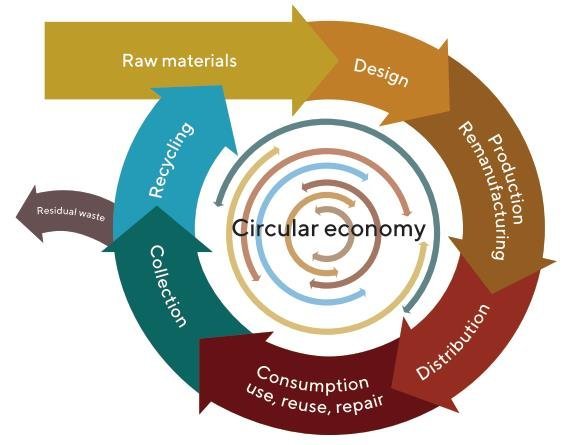
Image source: Model of Circular Economy (World Health Organization Regional Office for Europe, 2018).
In medical manufacturing, this can include:
- Using renewable or biodegradable materials
- Reducing manufacturing and packaging waste
- Designing products with responsible disposal
- Lowering energy and water consumption
- Improving supply chain efficiency
- Using greener processing methods
However, implementing circular economy principles in MedTech is more challenging than other industries. Medical products must comply with strict regulatory standards, such as ISO 13485, in regard to sterility, biocompatibility, durability, and patient safety. Manufacturers cannot change materials or processes without extensive testing and validation. Sustainability cannot come at the cost of patient safety.
Therefore, circularity in medical manufacturing is not just about recycling waste. It is about creating a system where environmental responsibility, quality assurance, and patient safety are integrated into every stage of product development and manufacturing.
Silk: Nature’s Original Circular Material and Its Untapped Potential in Healthcare
Traditionally known for its use in textiles and surgical sutures, silk possesses several characteristics that make it highly suitable for modern biomedical manufacturing.
The key is silk fibroin, the primary structural protein in silk. It is naturally biocompatible, biodegradable, mechanically strong, and highly versatile. Because it comes from a natural biological source, silk can biodegrade safely and may be processed using lower chemical intensity compared to many synthetic, petroleum-derived biomaterials.
Additionally, silk contains another protein called Sericin. Recent studies have highlighted sericin’s significant value in both the cosmetic and biomedical industries due to its moisturizing, antioxidant, anti-inflammatory, and biocompatible properties. Historically treated as a waste by-product of silk degumming, sericin is now recognized as a high-value biomaterial. Its applications are expanding across skincare, wound healing, tissue engineering, and regenerative medicine. This upcycling of sericin aligns strongly with sustainability principles by transforming waste by-products into functional healthcare and beauty ingredients.
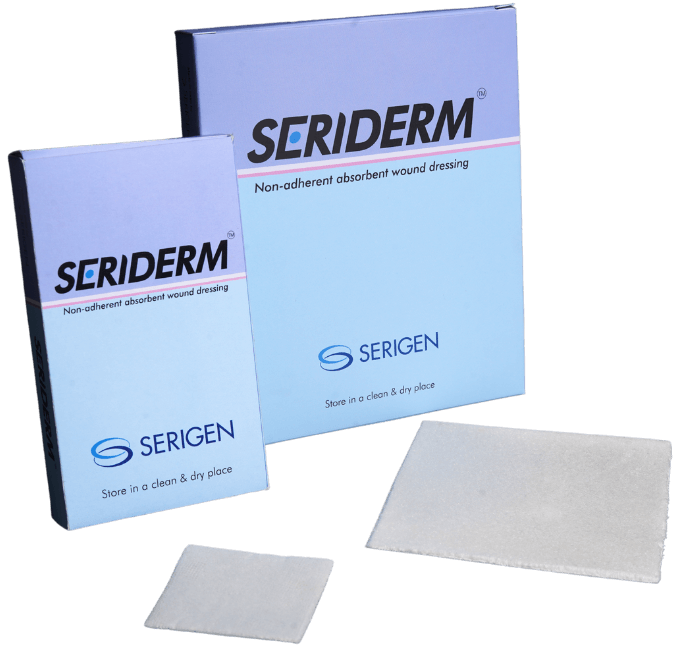
An example of silk-based medical innovation is Seriderm® from Serigen Mediproducts, which uses these silk-derived proteins for wound care applications. By utilizing silk-derived proteins in wound care applications, Seriderm® demonstrates how biomaterials can support healing while aligning with broader sustainability goals in medical manufacturing. It indicates the move toward materials that are not only clinically effective but also environmentally conscious. This combination of regenerative capability and sustainability establishes silk as a strong candidate for future circular healthcare systems.
Circular Economy in Medical Manufacturing: What Quality-Compliant, Sustainable Production Looks Like
Sustainable medical manufacturing requires more than just using biodegradable materials. True circular production involves designing the entire manufacturing process to reduce environmental impact while maintaining strict compliance with global quality and regulatory standards.
In practice, this includes reducing water and energy consumption, minimizing manufacturing waste, improving supply chain traceability, and adopting greener processing methods. Manufacturers must also ensure that sustainable materials remain compatible with sterilization processes and maintain consistent product performance. It is especially important for biomaterials like silk, where small processing variations can affect performance. Thus, sustainable manufacturing requires careful planning, process optimization, and strong quality management systems.
The future of sustainable biomedical manufacturing will combine renewable biomaterials like silk with green chemistry principles, energy-efficient production, and clean manufacturing strategies to minimize waste. This approach can help reduce environmental burden while supporting long-term innovation in MedTech.
The Road Ahead: The Challenges and Opportunities for Making Silk-Based Biomedical Innovation a Global Standard
Although silk-based biomedical manufacturing offers significant promise, certain factors must still be considered before broader global adoption. One important factor is scalability, as producing medical-grade silk-based devices at large commercial volumes requires specialized manufacturing capabilities and strict process controls. Maintaining batch-to-batch consistency is crucial for regulatory approval and product reliability. Sustainable materials also require a higher upfront investment compared to traditional synthetic alternatives
Despite these challenges, the opportunities are substantial. Global interest in sustainability is growing. Investors, regulators, healthcare providers, and patients are increasingly supporting environmentally responsible innovation. Advances in regenerative medicine, biomaterial science, and green manufacturing are accelerating the development of silk-based medical products.
At Serigen Mediproducts, we have leveraged India’s strong sericulture ecosystem and silk availability to support a stable raw material supply and improve cost efficiency for larger-scale production. In addition, by implementing globally benchmarked manufacturing protocols and robust quality systems, we are able to ensure consistent batch-to-batch performance.
At Serigen, we believe the future of medical technology lies in biomaterials that are not only clinically advanced but also aligned with long-term sustainability and responsible healthcare innovation. Through our silk-based tissue engineering products, we are working to demonstrate how regenerative medicine can combine scientific performance with environmentally conscious design. As the healthcare industry increasingly explores circular and sustainable approaches, Serigen aims to be at the forefront of this shift, helping shape a new generation of safer, smarter, and more responsible medical technologies.
References:
- Vepari, C., & Kaplan, D. L. (2007). Silk as a biomaterial. Progress in Polymer Science, 32(8–9), 991–1007.
- Altman, G. H., Diaz, F., Jakuba, C., Calabro, T., Horan, R. L., Chen, J., Lu, H., Richmond, J., & Kaplan, D. L. (2003). Silk-based biomaterials. Biomaterials, 24(3), 401–416.
- Ellen MacArthur Foundation. (2013). Towards the Circular Economy. Ellen MacArthur Foundation.
- Kundu, B., Rajkhowa, R., Kundu, S. C., & Wang, X. (2013). Silk fibroin biomaterials for tissue regenerations. Advanced Drug Delivery Reviews, 65(4), 457–470.
- Chetia, P. (2025). Upcycling silk waste into clean beauty: Sericin as a green skincare ingredient. Journal of Advances in Biology & Biotechnology, 28(8), 1038–1046.
 Author Bio – Smruti Gore is a Production Manager at Serigen Mediproducts. She holds a master’s degree in Pharmacology and toxicology from the University of Kansas, USA and has 6 years of professional experience in medical device manufacturing, R&D, and regulatory affairs.
How silk-based biomedical manufacturing is reshaping sustainability in MedTech
The medical device industry is built around one goal: improving lives. But as medical technologies continue to advance, an important issue is gaining attention: sustainability. Hospitals and medical device manufacturers generate huge amounts of waste through disposable products, packaging materials, and synthetic materials that remain in the environment for years after use. While these were developed to prioritize safety, sterility, and efficiency, they also contribute significantly to environmental pollution and resource consumption.
Now, the medical device industry is rethinking how products are designed and manufactured. Companies are under scrutiny from regulators, healthcare providers, and consumers to reduce environmental impact without compromising patient safety or product performance. This has brought attention to circular economy principles and renewable biomaterials that can support both healthcare innovation and environmental responsibility. Among these biomaterials, one of the most promising is silk. Known for centuries as a natural textile fibre, silk is now gaining recognition as an advanced biomedical material with the potential to transform sustainable manufacturing in MedTech.
What the Circular Economy Actually Means for Biomedical Manufacturing (Beyond Recycling)
A circular economy is a systemic approach to production and consumption that minimizes waste by keeping materials in use through repair, reuse, refurbishment, and recycling. The goal is to reduce waste throughout the entire lifecycle of a product — from raw material sourcing to manufacturing, use, and disposal.
Image source: Model of Circular Economy (World Health Organization Regional Office for Europe, 2018).
In medical manufacturing, this can include:
- Using renewable or biodegradable materials
- Reducing manufacturing and packaging waste
- Designing products with responsible disposal
- Lowering energy and water consumption
- Improving supply chain efficiency
- Using greener processing methods
However, implementing circular economy principles in MedTech is more challenging than other industries. Medical products must comply with strict regulatory standards, such as ISO 13485, in regard to sterility, biocompatibility, durability, and patient safety. Manufacturers cannot change materials or processes without extensive testing and validation. Sustainability cannot come at the cost of patient safety.
Therefore, circularity in medical manufacturing is not just about recycling waste. It is about creating a system where environmental responsibility, quality assurance, and patient safety are integrated into every stage of product development and manufacturing.
Silk: Nature’s Original Circular Material and Its Untapped Potential in Healthcare
Traditionally known for its use in textiles and surgical sutures, silk possesses several characteristics that make it highly suitable for modern biomedical manufacturing.
The key is silk fibroin, the primary structural protein in silk. It is naturally biocompatible, biodegradable, mechanically strong, and highly versatile. Because it comes from a natural biological source, silk can biodegrade safely and may be processed using lower chemical intensity compared to many synthetic, petroleum-derived biomaterials.
Additionally, silk contains another protein called Sericin. Recent studies have highlighted sericin’s significant value in both the cosmetic and biomedical industries due to its moisturizing, antioxidant, anti-inflammatory, and biocompatible properties. Historically treated as a waste by-product of silk degumming, sericin is now recognized as a high-value biomaterial. Its applications are expanding across skincare, wound healing, tissue engineering, and regenerative medicine. This upcycling of sericin aligns strongly with sustainability principles by transforming waste by-products into functional healthcare and beauty ingredients.
An example of silk-based medical innovation is Seriderm® from Serigen Mediproducts, which uses these silk-derived proteins for wound care applications. By utilizing silk-derived proteins in wound care applications, Seriderm® demonstrates how biomaterials can support healing while aligning with broader sustainability goals in medical manufacturing. It indicates the move toward materials that are not only clinically effective but also environmentally conscious. This combination of regenerative capability and sustainability establishes silk as a strong candidate for future circular healthcare systems.
Circular Economy in Medical Manufacturing: What Quality-Compliant, Sustainable Production Looks Like
Sustainable medical manufacturing requires more than just using biodegradable materials. True circular production involves designing the entire manufacturing process to reduce environmental impact while maintaining strict compliance with global quality and regulatory standards.
In practice, this includes reducing water and energy consumption, minimizing manufacturing waste, improving supply chain traceability, and adopting greener processing methods. Manufacturers must also ensure that sustainable materials remain compatible with sterilization processes and maintain consistent product performance. It is especially important for biomaterials like silk, where small processing variations can affect performance. Thus, sustainable manufacturing requires careful planning, process optimization, and strong quality management systems.
The future of sustainable biomedical manufacturing will combine renewable biomaterials like silk with green chemistry principles, energy-efficient production, and clean manufacturing strategies to minimize waste. This approach can help reduce environmental burden while supporting long-term innovation in MedTech.
The Road Ahead: The Challenges and Opportunities for Making Silk-Based Biomedical Innovation a Global Standard
Although silk-based biomedical manufacturing offers significant promise, certain factors must still be considered before broader global adoption. One important factor is scalability, as producing medical-grade silk-based devices at large commercial volumes requires specialized manufacturing capabilities and strict process controls. Maintaining batch-to-batch consistency is crucial for regulatory approval and product reliability. Sustainable materials also require a higher upfront investment compared to traditional synthetic alternatives
Despite these challenges, the opportunities are substantial. Global interest in sustainability is growing. Investors, regulators, healthcare providers, and patients are increasingly supporting environmentally responsible innovation. Advances in regenerative medicine, biomaterial science, and green manufacturing are accelerating the development of silk-based medical products.
At Serigen Mediproducts, we have leveraged India’s strong sericulture ecosystem and silk availability to support a stable raw material supply and improve cost efficiency for larger-scale production. In addition, by implementing globally benchmarked manufacturing protocols and robust quality systems, we are able to ensure consistent batch-to-batch performance.
At Serigen, we believe the future of medical technology lies in biomaterials that are not only clinically advanced but also aligned with long-term sustainability and responsible healthcare innovation. Through our silk-based tissue engineering products, we are working to demonstrate how regenerative medicine can combine scientific performance with environmentally conscious design. As the healthcare industry increasingly explores circular and sustainable approaches, Serigen aims to be at the forefront of this shift, helping shape a new generation of safer, smarter, and more responsible medical technologies.
References:
- Vepari, C., & Kaplan, D. L. (2007). Silk as a biomaterial. Progress in Polymer Science, 32(8–9), 991–1007.
- Altman, G. H., Diaz, F., Jakuba, C., Calabro, T., Horan, R. L., Chen, J., Lu, H., Richmond, J., & Kaplan, D. L. (2003). Silk-based biomaterials. Biomaterials, 24(3), 401–416.
- Ellen MacArthur Foundation. (2013). Towards the Circular Economy. Ellen MacArthur Foundation.
- Kundu, B., Rajkhowa, R., Kundu, S. C., & Wang, X. (2013). Silk fibroin biomaterials for tissue regenerations. Advanced Drug Delivery Reviews, 65(4), 457–470.
- Chetia, P. (2025). Upcycling silk waste into clean beauty: Sericin as a green skincare ingredient. Journal of Advances in Biology & Biotechnology, 28(8), 1038–1046.
Author Bio: Smruti Gore is a Production Manager at Serigen Mediproducts. She holds a master’s degree in Pharmacology and toxicology from the University of Kansas, USA and has 6 years of professional experience in medical device manufacturing, R&D, and regulatory affairs.