1. Introduction: Why Exudate Matters in Modern Wound Care
Wound exudate is a natural fluid that is released from the blood vessels at the wound site during the process of wound healing. Exudates are important for moisture balance as they provide necessary moisture for cell migration, proliferation, nutrient transport, and enzymes for the natural breakdown of dead tissue. Too little exudate (dry wounds) slows healing, and too much leads to maceration and infection, hindering wound healing. Exudate changes like increased volume, colour, odour, and viscosity are indicators of increased bacterial load, biofilm formation, or infection. Thus, recording wound exudate is beneficial. It serves as a key indicator of a wound’s condition and helps clinicians assess and manage the wound appropriately. Further, it also provides a guide for the selection of an optimal wound dressing to manage exudate effectively, ensuring a conducive environment for healing while actively reducing infection risk.
2. What Is Wound Exudate?
During the process of wound healing, blood vessels release a fluid at the wound site, composed of water, proteins, nutrients, inflammatory mediators, growth factors, and white blood cells. This fluid is known as wound exudate.
Normal wound exudate is typically clear, pale yellow/straw/pinkish in colour, and thin with little to no odour. It has a similar composition to blood plasma and supports wound healing through several mechanisms, such as –
- Moist environment: Exudate prevents the wound bed from drying out and forming a scab, and facilitates the migration of tissue-repairing cells, such as leukocytes, macrophages, and fibroblasts, to the site of injury for faster healing.
- Transport of nutrients: It enables the transport of essential nutrients, oxygen, growth factors, and immune mediators across the wound bed, all of which are critical for cell metabolism and tissue regeneration.
- Cleansing the wound: Exudate aids autolytic debridement via proteases and matrix metalloproteinases (MMPs) that help break down and separate dead or damaged (necrotic) tissue and debris, and prepare the wound bed naturally suitable for healing.
- Immune mediators for tissue repair: During the inflammatory phase, exudate allows migration of immune cells like neutrophils and macrophages to the wound site, which prevent infection and clear out pathogens and foreign bodies from the wound site.
On the other hand, abnormal exudates are mainly produced in excess quantity and have abnormal composition. It is typically thick, milky, yellow, green, or brown, and has a foul smell if the wound is infected. For example, chronic wound (eg. Diabetic foot ulcers) exudates have high levels of inflammatory mediators, matrix metalloproteases (MMPs) that may degrade growth factors and extracellular matrix (ECM), resulting in delayed healing.
Importance of optimal moisture balance in promoting wound healing
While essential for healing, the amount and composition of exudate must be in balance. Insufficient exudate can lead to a dry wound bed, causing cell death and delayed healing. Excessive exudate can damage the surrounding skin (maceration) and indicate an underlying issue like infection, which can halt the healing process.
3. Types of Exudate in Wounds
Wound exudates are classified based on their consistency, appearance, colour and odour.
3.1 Serous Exudate: Serous exudate is typically clear to yellow, thin, and watery. This is normal and typical in the inflammatory and proliferative phases of healing. An excessive volume may indicate inflammation or underlying oedema.
3.2 Sanguineous Exudate: This is a red, bloody exudate. Though it is a common type of exudate but may also be associated with hypergranulation or trauma to the wound bed, especially during a dressing change.
3.3 Serosanguineous Exudate: This is a mixture of serous and sanguineous fluid, appearing pink or blood-tinged. It is typically observed in the inflammatory or proliferative phases.
3.4 Purulent Exudate (Pus): Purulent exudate is milky, thicker in consistency, and appears grey, green, or yellow. It is a strong indicator of infection. The presence of pus necessitates medical assistance and may need a wound swab and culture test to identify the infection-causing agent. Purulent exudates often cause foul odour.
3.5 Fibrinous Exudate: Fibrinous exudate is often associated with the breakdown of fibrin, which can appear as a layer of dead or unhealthy tissue (slough) on the wound bed. It appears yellow, brown, or grey and is usually odourless. The slough must be removed for healthy regeneration of tissue.
3.6 “Yellow Exudate From Wound”: Yellow exudate does not always indicate infection. Clear to yellow exudate (serous) is a normal part of healing. But yellow exudates with thick consistency may indicate the presence of bacteria, dead tissue, or excess inflammation. This type of discharge can slow healing if not managed properly. Proper cleaning, appropriate dressings, and medical evaluation help control yellow exudate.
4. Wound Exudate Chart: Quick Reference Guide
|
Type of exudate |
Colour |
Consistency |
Odour |
Volume |
Likely Cause |
Recommended Response |
|
Serous Exudate |
Clear to Pale Yellow |
Thin, watery |
No odour |
Minimal to Moderate |
Normal healing, inflammatory/proliferative phase. |
Maintain moisture with a hydrocolloid or film dressing. |
|
Sero-sanguineous Exudate |
Pink/ Red–tinged |
Thin, watery to slightly thick |
No odour |
Minimal to Moderate |
Normal healing, capillary damage (minor bleeding). |
Continue with moisture-balancing dressing; monitor. |
|
Sanguineous Exudate |
Bright Red |
Thin to thick |
No odour to slight malodour |
Moderate to Heavy |
Trauma to the wound bed (e.g., dressing removal) or hypergranulation. |
Address the source of bleeding; consider a non-adherent dressing. |
|
Purulent Exudate |
Yellow, Grey, or Green |
Thick, milky |
Moderate to Strong Malodour |
Moderate to Heavy |
Infection |
Seek medical review; consider antimicrobial dressing such as silver dressings or systemic antibiotics. |
5. Causes of Excessive Wound Exudate
Exudate production from a wound can be influenced by several local, systemic, and practical factors. Highly exuding wounds produce approximately greater than 14-15 ml exudate per day. Factors that cause inflammation and oedema are responsible for high exudate production.
Local factors: Locally, exudate may increase due to wound site infection, biofilm formation, inflammation, or trauma caused by surgical debridement or dressing changes, etc. Another major factor includes oedema caused by venous insufficiency or lymphatic dysfunction. Venous stasis is a condition where blood flow through the veins is reduced or slowed, causing blood to pool in the affected area. This increases pressure in small blood vessels. The accumulated fluid then leaks out into the wound, causing increased wound drainage. The most common site is the legs. Presence of debris (slough/necrotic tissue) at the wound site promotes the risk of infection and inflammation.
Systemic factors: Systemic conditions such as cardiac, renal, or liver failure, infection or inflammation, endocrine disorders, obesity, fluid overload during intravenous therapy, malnutrition, ageing, low serum albumin levels, raised C-reactive protein, and certain medications like calcium channel blockers, NSAIDs, steroids can increase exudate levels.
Practical factors: Factors like the location of the wound, exposure to heat, poor patient cooperation with treatment, and inappropriate dressing choice can influence the amount of exudate produced. For example, wounds located in areas such as the lower limbs or sacral region tend to exhibit higher exudate formation.
Wound sinuses, fistulas, and tumours also significantly alter wound exudate by increasing its volume and making it abnormal in colour, consistency, and odour, often hindering healing. Sinuses typically produce purulent, foul-smelling exudate due to ongoing infection or necrotic tissue. Fistulas result in high-volume drainage, which may be corrosive to the surrounding skin. Malignant or fungating wounds generate copious, often bloody exudate with slough and necrotic debris due to tumour-related inflammation and fragile vasculature. Overall, these conditions significantly affect the quantity and quality of exudate.
6. How to Assess Wound Exudate Correctly
6.1 Assessing Exudate Volume
Exudate volume is typically described by the amount of fluid absorbed by the dressing and can be categorised as:
- Scant: Minimal moisture, sometimes with a dry wound bed.
- Moderate: Manageable moisture, requires a dressing with a good absorption capacity.
- Heavy: High volume, requiring highly absorbent or super-absorbent dressings.
- Copious: Fluid that is leaking or saturating dressings rapidly, indicating a significant management challenge.
Assessing exudate levels helps clinicians select the appropriate wound dressing.
- Assessing Colour & Odour
The colour (serous, sanguineous, purulent) of the wound exudate helps determine the stage of healing or the presence of infection. Odour is a key sign of infection. It can be classified as slight (odour when dressing is removed), moderate (odour upon entering the room when dressing is removed), or strong (odour upon entering the room with the dressing intact). Any notable malodour should prompt further investigation to identify the cause of the odour.
6.3 When to Swab and Culture the Wound
Evidence-based triggers for taking a wound swab include clinical indicators of infection:
- Purulent discharge (pus)
- Fever, increased pain, or cellulitis (spreading redness/swelling).
- Strong malodour
6.4 When to Seek Medical Help
The aforementioned parameters, such as a sudden increase in exudate volume, a change in exudate consistency (thick, milky, yellow, grey, or green appearance), and any signs of systemic infection (fever, chills, etc.), are red flags indicative of a need to seek immediate medical attention. Moreover, a persistent, strong, and unpleasant odour coming from the wound, increased pain and discomfort to the patient, and spreading of redness, warmth, or swelling to the surrounding wound area (cellulitis) are also concerning. The presence of any one or more symptoms strongly indicates that home care alone is not sufficient for wound management. This is the time to seek medical help to prevent further damage.
7. Exudate Management in Wound Care
7.1 Principles of Effective Wound Exudate Management
The core goal of wound exudate management is to achieve moisture balance and maintain optimal pH and temperature to prevent maceration, promote healing, while controlling exudate.
- Moisture Balance: Maintain a moist wound bed to promote autolytic debridement and cell migration. Avoid desiccation (drying out) and maceration (excessive moisture).
- Preventing Maceration: Protect the surrounding skin from the wound fluid using dressings that effectively contain and absorb exudate.
- Maintaining Optimal pH and Temperature: Leukocytes and other cells function best at approximately 37°C. A neutral or acidic pH is generally beneficial.
Apart from physical protection, dressings should help maintain this stable and balanced environment at the wound site for accelerated healing.
7.2 Wound Dressing Selection for Different Exudate Levels
Assessment of exudate levels, type, colour and odour provide a guidance for the selection of dressing. Dressings are chosen based on exudate properties (volume, consistency, nature) to absorb excess, prevent leakage, and maintain the ideal moist wound bed. Correct selection prevents maceration, skin breakdown, pain, odour, and frequent changes, improving the patient’s quality of life. In chronic wounds, exudate can contain high levels of proteases that inhibit healing; specific dressings are needed that will modulate protease activity, reduce inflammation, and rescue wounds from inflammatory arrest.
- For low exuding wounds, preferred dressings include: Films, hydrogels (to provide hydration), or hydrocolloids.
- For moderately exuding wounds, preferred dressings include: Foams, alginates, or hydrocolloids.
- For highly exuding wounds, preferred dressings include: Highly absorbent foams, alginates (hydrofiber dressings), or super absorbents.
- For Highly Infected wounds: Antimicrobial dressings (e.g., silver-containing dressings). Semi-occlusive dressings/occlusive dressings should be avoided on infected wounds as they can trap bacteria.
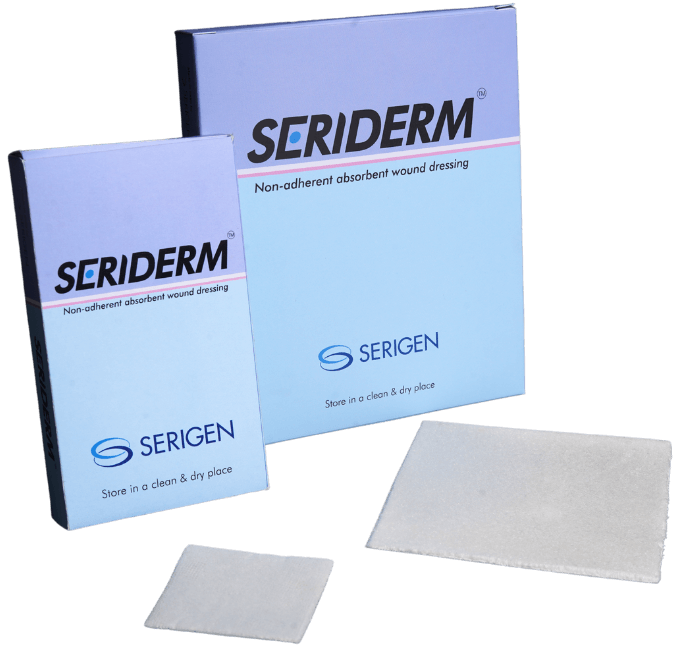
Seriderm™ is an absorbent, non-adherent silk-based wound dressing that offers optimal moisture control in the wound environment. It offers accelerated and superior healing for the management of mild to moderately exuding wounds, including full-thickness wounds, diabetic ulcers, pressure ulcers, first and second degree burns,s and surgical wounds.
- How to Manage Excessive or “Leaking” Wounds
Management of Excessive or “Leaking” wounds needs a step-by-step clinical approach:
- Identification of the root cause: Assessment of the level of infection, bioburden, type of infection, and underlying systemic issues like venous insufficiency, if any.
- Cleansing and Debridement: Cleansing of the wound area to remove debris/slough that promotes inflammation.
- Highly Absorbent Dressings/Vacuum dressings: Selection of a high fluid handling capacity dressing, such as a thick foam or a super-absorbent pad, to manage the volume.
- Protection of the peri-wound area: Use barrier creams or skin prep to protect the skin surrounding the wound from maceration caused by leakage.
- Frequent Wound Assessment: Increase the frequency of dressing changes until the exudate volume is controlled.
7.4. Complications from Improper Exudate Management
Failing to manage wound exudate effectively can lead to:
- Maceration: Excessive moisture causes the peri-wound skin to soften, whiten, and break down, leading to enlargement of the wound.
- Delayed Healing: Either too little moisture (desiccation) or excessive, prolonged moisture and inflammatory mediators (abnormal composition) can slow or halt the healing process.
- Infection Progression: Excessive exudate makes the environment suitable for bacterial growth and increases the risk of secondary infections.
- Dressing Failure: Rapid saturation of a non-absorbent dressing leads to leakage, maceration, discomfort to the patient, fluid accumulation,n and necessitates frequent dressing changes.
7.5 Why Seriderm is an excellent wound dressing for exudate management
Seriderm™ is a one-stop wound dressing solution for the management of mild to moderately exuding wounds, including full-thickness wounds, diabetic ulcers, pressure ulcers, first and second-degree burns, and surgical wounds.
It is a non-adherent, absorbent wound dressing with 100% silk protein in the wound contact layer, fabricated in the form of a thin sheet. Seriderm’s engineered properties make it suitable for effective exudate management:
- Absorption: Seriderm™ is absorbent, with a capacity to absorb exudate and meet the requirement of managing 12–24 ml of exudate over a 24-hour period. This absorption capability maintains the optimal moist wound environment essential for healing.
- Moisture balance: The dressing has a Moisture Vapour Transmission Rate (MVTR) of 1104 ± 137 g/m²/24h. This optimal MVTR range is targeted by advanced wound care dressings to prevent both desiccation (by retaining moisture) and maceration (by allowing excess moisture to escape).
- Non-Adherence: Seriderm™ is non-adherent. This key feature allows for atraumatic and painless dressing changes, which allow uninterrupted wound healing.
8. Conclusion
Effective exudate management is a cornerstone of modern wound care, acting as the foundation for an optimal healing environment. By accurately assessing the volume, colour, and consistency of wound exudate, clinicians can make evidence-based decisions on dressing selection. The goal is always to achieve a balance: maintaining moisture to accelerate healing while protecting the surrounding skin from maceration. Products like the silk protein-based Seriderm™ offer a non-adherent, absorbent solution with optimal moisture regulation properties for mild to moderately exuding wounds. Consistent, evidence-based management with such proven wound dressings is essential to prevent complications and ensure timely wound closure.
References:
- Wound Essentials (2008) Wound exudate: What it is and how to manage it. (2008). Wound Essentials, 3, 1–6.
Wound exudate: what it is and how to manage it (2008). Wound Essentials, Volume 3 - World Union of Wound Healing Societies. (2019). Wound exudate: Effective assessment and management. Wounds International.
Retrieved from https://www.woundsinternational.com - The Royal Children’s Hospital Melbourne. (n.d.). Wound dressings: Acute traumatic wounds. https://www.rch.org.au/clinicalguide/guideline_index/wound_dressings_acute_traumatic_wounds/
- The Royal Children’s Hospital Melbourne. (n.d.). Nursing guidelines: Wound assessment and management. https://www.rch.org.au/rchcpg/hospital_clinical_guideline_index/Wound_assessment_and_management/
 Author Bio – Dr. Rucha Deshpade is Senior Manager at Serigen Mediproducts. She holds a PhD in Zoology from the National Center for Cell Science and the University of Pune and has 10 years of professional experience in molecular biology, biomaterials, and cell biology.
1. Introduction: Why Exudate Matters in Modern Wound Care
Wound exudate is a natural fluid that is released from the blood vessels at the wound site during the process of wound healing. Exudates are important for moisture balance as they provide necessary moisture for cell migration, proliferation, nutrient transport, and enzymes for the natural breakdown of dead tissue. Too little exudate (dry wounds) slows healing, and too much leads to maceration and infection, hindering wound healing. Exudate changes like increased volume, colour, odour, and viscosity are indicators of increased bacterial load, biofilm formation, or infection. Thus, recording wound exudate is beneficial. It serves as a key indicator of a wound’s condition and helps clinicians assess and manage the wound appropriately. Further, it also provides a guide for the selection of an optimal wound dressing to manage exudate effectively, ensuring a conducive environment for healing while actively reducing infection risk.
2. What Is Wound Exudate?
During the process of wound healing, blood vessels release a fluid at the wound site, composed of water, proteins, nutrients, inflammatory mediators, growth factors, and white blood cells. This fluid is known as wound exudate.
Normal wound exudate is typically clear, pale yellow/straw/pinkish in colour, and thin with little to no odour. It has a similar composition to blood plasma and supports wound healing through several mechanisms, such as –
- Moist environment: Exudate prevents the wound bed from drying out and forming a scab, and facilitates the migration of tissue-repairing cells, such as leukocytes, macrophages, and fibroblasts, to the site of injury for faster healing.
- Transport of nutrients: It enables the transport of essential nutrients, oxygen, growth factors, and immune mediators across the wound bed, all of which are critical for cell metabolism and tissue regeneration.
- Cleansing the wound: Exudate aids autolytic debridement via proteases and matrix metalloproteinases (MMPs) that help break down and separate dead or damaged (necrotic) tissue and debris, and prepare the wound bed naturally suitable for healing.
- Immune mediators for tissue repair: During the inflammatory phase, exudate allows migration of immune cells like neutrophils and macrophages to the wound site, which prevent infection and clear out pathogens and foreign bodies from the wound site.
On the other hand, abnormal exudates are mainly produced in excess quantity and have abnormal composition. It is typically thick, milky, yellow, green, or brown, and has a foul smell if the wound is infected. For example, chronic wound (eg. Diabetic foot ulcers) exudates have high levels of inflammatory mediators, matrix metalloproteases (MMPs) that may degrade growth factors and extracellular matrix (ECM), resulting in delayed healing.
Importance of optimal moisture balance in promoting wound healing
While essential for healing, the amount and composition of exudate must be in balance. Insufficient exudate can lead to a dry wound bed, causing cell death and delayed healing. Excessive exudate can damage the surrounding skin (maceration) and indicate an underlying issue like infection, which can halt the healing process.
3. Types of Exudate in Wounds
Wound exudates are classified based on their consistency, appearance, colour and odour.
3.1 Serous Exudate: Serous exudate is typically clear to yellow, thin, and watery. This is normal and typical in the inflammatory and proliferative phases of healing. An excessive volume may indicate inflammation or underlying oedema.
3.2 Sanguineous Exudate: This is a red, bloody exudate. Though it is a common type of exudate but may also be associated with hypergranulation or trauma to the wound bed, especially during a dressing change.
3.3 Serosanguineous Exudate: This is a mixture of serous and sanguineous fluid, appearing pink or blood-tinged. It is typically observed in the inflammatory or proliferative phases.
3.4 Purulent Exudate (Pus): Purulent exudate is milky, thicker in consistency, and appears grey, green, or yellow. It is a strong indicator of infection. The presence of pus necessitates medical assistance and may need a wound swab and culture test to identify the infection-causing agent. Purulent exudates often cause foul odour.
3.5 Fibrinous Exudate: Fibrinous exudate is often associated with the breakdown of fibrin, which can appear as a layer of dead or unhealthy tissue (slough) on the wound bed. It appears yellow, brown, or grey and is usually odourless. The slough must be removed for healthy regeneration of tissue.
3.6 “Yellow Exudate From Wound”: Yellow exudate does not always indicate infection. Clear to yellow exudate (serous) is a normal part of healing. But yellow exudates with thick consistency may indicate the presence of bacteria, dead tissue, or excess inflammation. This type of discharge can slow healing if not managed properly. Proper cleaning, appropriate dressings, and medical evaluation help control yellow exudate.
4. Wound Exudate Chart: Quick Reference Guide
|
Type of exudate |
Colour |
Consistency |
Odour |
Volume |
Likely Cause |
Recommended Response |
|
Serous Exudate |
Clear to Pale Yellow |
Thin, watery |
No odour |
Minimal to Moderate |
Normal healing, inflammatory/proliferative phase. |
Maintain moisture with a hydrocolloid or film dressing. |
|
Sero-sanguineous Exudate |
Pink/ Red–tinged |
Thin, watery to slightly thick |
No odour |
Minimal to Moderate |
Normal healing, capillary damage (minor bleeding). |
Continue with moisture-balancing dressing; monitor. |
|
Sanguineous Exudate |
Bright Red |
Thin to thick |
No odour to slight malodour |
Moderate to Heavy |
Trauma to the wound bed (e.g., dressing removal) or hypergranulation. |
Address the source of bleeding; consider a non-adherent dressing. |
|
Purulent Exudate |
Yellow, Grey, or Green |
Thick, milky |
Moderate to Strong Malodour |
Moderate to Heavy |
Infection |
Seek medical review; consider antimicrobial dressing such as silver dressings or systemic antibiotics. |
5. Causes of Excessive Wound Exudate
Exudate production from a wound can be influenced by several local, systemic, and practical factors. Highly exuding wounds produce approximately greater than 14-15 ml exudate per day. Factors that cause inflammation and oedema are responsible for high exudate production.
Local factors: Locally, exudate may increase due to wound site infection, biofilm formation, inflammation, or trauma caused by surgical debridement or dressing changes, etc. Another major factor includes oedema caused by venous insufficiency or lymphatic dysfunction. Venous stasis is a condition where blood flow through the veins is reduced or slowed, causing blood to pool in the affected area. This increases pressure in small blood vessels. The accumulated fluid then leaks out into the wound, causing increased wound drainage. The most common site is the legs. Presence of debris (slough/necrotic tissue) at the wound site promotes the risk of infection and inflammation.
Systemic factors: Systemic conditions such as cardiac, renal, or liver failure, infection or inflammation, endocrine disorders, obesity, fluid overload during intravenous therapy, malnutrition, ageing, low serum albumin levels, raised C-reactive protein, and certain medications like calcium channel blockers, NSAIDs, steroids can increase exudate levels.
Practical factors: Factors like the location of the wound, exposure to heat, poor patient cooperation with treatment, and inappropriate dressing choice can influence the amount of exudate produced. For example, wounds located in areas such as the lower limbs or sacral region tend to exhibit higher exudate formation.
Wound sinuses, fistulas, and tumours also significantly alter wound exudate by increasing its volume and making it abnormal in colour, consistency, and odour, often hindering healing. Sinuses typically produce purulent, foul-smelling exudate due to ongoing infection or necrotic tissue. Fistulas result in high-volume drainage, which may be corrosive to the surrounding skin. Malignant or fungating wounds generate copious, often bloody exudate with slough and necrotic debris due to tumour-related inflammation and fragile vasculature. Overall, these conditions significantly affect the quantity and quality of exudate.
6. How to Assess Wound Exudate Correctly
6.1 Assessing Exudate Volume
Exudate volume is typically described by the amount of fluid absorbed by the dressing and can be categorised as:
- Scant: Minimal moisture, sometimes with a dry wound bed.
- Moderate: Manageable moisture, requires a dressing with a good absorption capacity.
- Heavy: High volume, requiring highly absorbent or super-absorbent dressings.
- Copious: Fluid that is leaking or saturating dressings rapidly, indicating a significant management challenge.
Assessing exudate levels helps clinicians select the appropriate wound dressing.
- Assessing Colour & Odour
The colour (serous, sanguineous, purulent) of the wound exudate helps determine the stage of healing or the presence of infection. Odour is a key sign of infection. It can be classified as slight (odour when dressing is removed), moderate (odour upon entering the room when dressing is removed), or strong (odour upon entering the room with the dressing intact). Any notable malodour should prompt further investigation to identify the cause of the odour.
6.3 When to Swab and Culture the Wound
Evidence-based triggers for taking a wound swab include clinical indicators of infection:
- Purulent discharge (pus)
- Fever, increased pain, or cellulitis (spreading redness/swelling).
- Strong malodour
6.4 When to Seek Medical Help
The aforementioned parameters, such as a sudden increase in exudate volume, a change in exudate consistency (thick, milky, yellow, grey, or green appearance), and any signs of systemic infection (fever, chills, etc.), are red flags indicative of a need to seek immediate medical attention. Moreover, a persistent, strong, and unpleasant odour coming from the wound, increased pain and discomfort to the patient, and spreading of redness, warmth, or swelling to the surrounding wound area (cellulitis) are also concerning. The presence of any one or more symptoms strongly indicates that home care alone is not sufficient for wound management. This is the time to seek medical help to prevent further damage.
7. Exudate Management in Wound Care
7.1 Principles of Effective Wound Exudate Management
The core goal of wound exudate management is to achieve moisture balance and maintain optimal pH and temperature to prevent maceration, promote healing, while controlling exudate.
- Moisture Balance: Maintain a moist wound bed to promote autolytic debridement and cell migration. Avoid desiccation (drying out) and maceration (excessive moisture).
- Preventing Maceration: Protect the surrounding skin from the wound fluid using dressings that effectively contain and absorb exudate.
- Maintaining Optimal pH and Temperature: Leukocytes and other cells function best at approximately 37°C. A neutral or acidic pH is generally beneficial.
Apart from physical protection, dressings should help maintain this stable and balanced environment at the wound site for accelerated healing.
7.2 Wound Dressing Selection for Different Exudate Levels
Assessment of exudate levels, type, colour and odour provide a guidance for the selection of dressing. Dressings are chosen based on exudate properties (volume, consistency, nature) to absorb excess, prevent leakage, and maintain the ideal moist wound bed. Correct selection prevents maceration, skin breakdown, pain, odour, and frequent changes, improving the patient’s quality of life. In chronic wounds, exudate can contain high levels of proteases that inhibit healing; specific dressings are needed that will modulate protease activity, reduce inflammation, and rescue wounds from inflammatory arrest.
- For low exuding wounds, preferred dressings include: Films, hydrogels (to provide hydration), or hydrocolloids.
- For moderately exuding wounds, preferred dressings include: Foams, alginates, or hydrocolloids.
- For highly exuding wounds, preferred dressings include: Highly absorbent foams, alginates (hydrofiber dressings), or super absorbents.
- For Highly Infected wounds: Antimicrobial dressings (e.g., silver-containing dressings). Semi-occlusive dressings/occlusive dressings should be avoided on infected wounds as they can trap bacteria.
Seriderm™ is an absorbent, non-adherent silk-based wound dressing that offers optimal moisture control in the wound environment. It offers accelerated and superior healing for the management of mild to moderately exuding wounds, including full-thickness wounds, diabetic ulcers, pressure ulcers, first and second degree burns,s and surgical wounds.
- How to Manage Excessive or “Leaking” Wounds
Management of Excessive or “Leaking” wounds needs a step-by-step clinical approach:
- Identification of the root cause: Assessment of the level of infection, bioburden, type of infection, and underlying systemic issues like venous insufficiency, if any.
- Cleansing and Debridement: Cleansing of the wound area to remove debris/slough that promotes inflammation.
- Highly Absorbent Dressings/Vacuum dressings: Selection of a high fluid handling capacity dressing, such as a thick foam or a super-absorbent pad, to manage the volume.
- Protection of the peri-wound area: Use barrier creams or skin prep to protect the skin surrounding the wound from maceration caused by leakage.
- Frequent Wound Assessment: Increase the frequency of dressing changes until the exudate volume is controlled.
7.4. Complications from Improper Exudate Management
Failing to manage wound exudate effectively can lead to:
- Maceration: Excessive moisture causes the peri-wound skin to soften, whiten, and break down, leading to enlargement of the wound.
- Delayed Healing: Either too little moisture (desiccation) or excessive, prolonged moisture and inflammatory mediators (abnormal composition) can slow or halt the healing process.
- Infection Progression: Excessive exudate makes the environment suitable for bacterial growth and increases the risk of secondary infections.
- Dressing Failure: Rapid saturation of a non-absorbent dressing leads to leakage, maceration, discomfort to the patient, fluid accumulation,n and necessitates frequent dressing changes.
7.5 Why Seriderm is an excellent wound dressing for exudate management
Seriderm™ is a one-stop wound dressing solution for the management of mild to moderately exuding wounds, including full-thickness wounds, diabetic ulcers, pressure ulcers, first and second-degree burns, and surgical wounds.
It is a non-adherent, absorbent wound dressing with 100% silk protein in the wound contact layer, fabricated in the form of a thin sheet. Seriderm’s engineered properties make it suitable for effective exudate management:
- Absorption: Seriderm™ is absorbent, with a capacity to absorb exudate and meet the requirement of managing 12–24 ml of exudate over a 24-hour period. This absorption capability maintains the optimal moist wound environment essential for healing.
- Moisture balance: The dressing has a Moisture Vapour Transmission Rate (MVTR) of 1104 ± 137 g/m²/24h. This optimal MVTR range is targeted by advanced wound care dressings to prevent both desiccation (by retaining moisture) and maceration (by allowing excess moisture to escape).
- Non-Adherence: Seriderm™ is non-adherent. This key feature allows for atraumatic and painless dressing changes, which allow uninterrupted wound healing.
8. Conclusion
Effective exudate management is a cornerstone of modern wound care, acting as the foundation for an optimal healing environment. By accurately assessing the volume, colour, and consistency of wound exudate, clinicians can make evidence-based decisions on dressing selection. The goal is always to achieve a balance: maintaining moisture to accelerate healing while protecting the surrounding skin from maceration. Products like the silk protein-based Seriderm™ offer a non-adherent, absorbent solution with optimal moisture regulation properties for mild to moderately exuding wounds. Consistent, evidence-based management with such proven wound dressings is essential to prevent complications and ensure timely wound closure.
References:
- Wound Essentials (2008) Wound exudate: What it is and how to manage it. (2008). Wound Essentials, 3, 1–6.
Wound exudate: what it is and how to manage it (2008). Wound Essentials, Volume 3 - World Union of Wound Healing Societies. (2019). Wound exudate: Effective assessment and management. Wounds International.
Retrieved from https://www.woundsinternational.com - The Royal Children’s Hospital Melbourne. (n.d.). Wound dressings: Acute traumatic wounds. https://www.rch.org.au/clinicalguide/guideline_index/wound_dressings_acute_traumatic_wounds/
- The Royal Children’s Hospital Melbourne. (n.d.). Nursing guidelines: Wound assessment and management. https://www.rch.org.au/rchcpg/hospital_clinical_guideline_index/Wound_assessment_and_management/
Author Bio – Dr. Rucha Deshpade is Senior Manager at Serigen Mediproducts. She holds a PhD in Zoology from the National Center for Cell Science and the University of Pune and has 10 years of professional experience in molecular biology, biomaterials, and cell biology.